News   Dec 05, 2025
 688     2 
News   Dec 05, 2025
 2.3K     4 
News   Dec 05, 2025
 470     0 

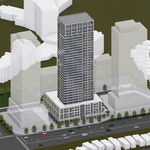
Toronto developers are quietly cancelling condos.

But no one ever mentions the formerly quite livable homes purchased for large infill houses which have been sitting uninhabited now for a couple of years…mind you the infill that has been built for $4 million plus isn’t sellling either…
 
But no one ever mentions the formerly quite livable homes purchased for large infill houses which have been sitting uninhabited now for a couple of years…mind you the infill that has been built for $4 million plus isn’t sellling either…
It’s one of the reasons that boomers aren’t releasing their large homes onto the market. If you don’t want to live in a condo and want to stay in the city there’s few of the smaller houses available. So many of the city’s postwar bungalows have been bought up, torn down and replaced with expensive, hugely oversized monstrosities. Even myself, in a few years my downtown five bedroom, three story semi will be mostly empty as my kids launch, but where am I going to find a two bedroom, one plus bath with parking that’s not a condo? So, I’ll stay put into retirement.
 
Last edited:
It’s one of the reasons that boomers aren’t releasing their large homes onto the market. If you don’t want to live in a condo and want to stay in the city there’s few of the smaller houses available. So many of the city’s postwar bungalows have been bought up, torn down and replaced with expensive, hugely oversized monstrosities. Even myself, in a few years my downtown five bedroom, three story semi will be mostly empty as my kids launch, but where am I going to find a two bedroom, one plus bath with parking that’s not a condo? So, I’ll stay put into retirement.

I've worked on some of those oversized monstrosities. I always google earth the address to see what the house looked like before the new cartoonish looking house was built. And it's usually some quaint post war bungalow or mid century 1960s ranch style house.

My partner and I got a five bedroom house out in the suburbs. Only one bedroom is being used, the rest of the rooms are for guests and storage, we also got a pretty big yard, it's a corner lot. You could fit another shoe-box looking house on the side yard no problem. If those postwar bungalows weren't so insanely expensive we would move tomorrow to the downtown area. Condos are out of the question. They are just way too small and also expensive. We looked at a lot of condo's last year downtown. It was pretty depressing.
 

Toronto’s painful ’90s housing crash came with neon hair, wild raves and a condo collapse. At least one of those things is back​

In 1989, the real-estate market tanked ‘and we were in the exact same predicament as we are right now,’ recalls one Toronto realtor. Is there anything we can learn?

See https://www.thestar.com/real-estate/torontos-painful-90s-housing-crash-came-with-neon-hair-wild-raves-and-a-condo-collapse/article_31e46b3b-8c2f-4268-abe5-b1c9aec6e68c.html
The rookie agent was all business, despite the blue streak in his hair.

On weekends he climbed up outdoor staircases that led to raves in abandoned downtown Toronto industrial buildings, dancing to Tina Turner.

But on Monday morning, arriving at his Yonge Street and St. Clair Avenue office in a Volkswagen sports car, Steve Fudge, then 27, would face the mess of the recent Toronto real-estate crash.

He had to tell sellers their homes were worth tens of thousands of dollars less than what they bought them for, and called lenders on behalf of owners who couldn’t make mortgage payments.

In between, he’d gather with his colleagues around the water cooler and chat about the latest technology set to transform the industry — the pager — and wonder when things would get better.

The year was 1989.

“The market tanked, and we were in the exact same predicament as we are right now — oversupply, lots of investors and lots of huge losses,” Fudge remembers.
He found himself at the centre of a storm.

In the mid-’80s, a glut of condo investors spurred a steep run-up of home prices in Toronto.

The fear of missing out, long before that phrase was ever coined, led buyers to pile in. They were convinced they needed to secure property or be shut out forever, and that prices would never go down.

Between 1985 and 1989, average home prices in Toronto-area went up a whopping 151 per cent, from about $109,000 to a high of roughly $274,000, according to the Toronto Regional Real Estate Board (TRREB).

But by 1990, some investors and first-time homeowners were handing their keys over to the bank, no longer able to afford their mortgages.

Prices slid for seven years in a row to a low of about $198,000 in 1996, an almost 30 per cent drop. Power of sales, where the lender sells a home because the owner hasn’t kept up on payments, spiked.

New construction halted, and suddenly Toronto real estate didn’t seem like a safe bet.

It’s all feeling somewhat familiar in 2025, as higher interest rates and falling prices drive developers to pull the plug on condo projects, some buyers face trouble closing, and investors pull away.

Prices haven’t dropped as much (according to the last TRREB report the average price across all property types has fallen around 21 per cent since the winter 2022 market peak). But sales slumped for a year and a half before picking up slightly in the last couple of months, resting at well below the 10-year average.

This has led many to ask, in social media posts and hushed conversations around the dinner table: is the city headed for a similar crash?
And what we can learn from the last one?

A good price for a ‘world-class’ city​

In the summer of 1989, right around when Fudge got his real-estate licence, the market went quiet.

“It was almost an exhaustion moment. Basically the prices had gone up so much that buyers just said ‘forget it.’”

He hadn’t been around for the lead-up so it was easier to explain to young couples that the home they paid $330,000 for was now worth $210,000. Often they needed to sell because one of them had recently lost their job.

“We’re talking about a collapse of an entire household,” he remembers. “It was overwhelming.”

To understand how they got into that mess, you have to go even further back.

In the early ’80s, the cost of homes was more in line with what middle-class Canadians could afford, said Carolyn Whitzman, an adjunct professor and senior housing researcher with the University of Toronto’s School of Cities.

Prices started going up “precipitously” towards the end of that decade.

1755984236559.png


In Toronto, there were strict zoning rules in much of the city, and “there just wasn’t any room for new single-family homes,” she said.
Condos were built in a frenzy.

They were considered great starter homes. But they were also limited in stock and where they could go, which put pressure on prices, Whitzman added.

Mathieu Laberge, chief economist and senior vice-president of housing insights at the Canada Mortgage and Housing Corp., said the boom was driven by speculative builders starting construction with only half, and sometimes less, of units sold.

Local mom and pop investors “jumped on the bandwagon” and bought up condos as a hedge against inflation, Fudge added, which was very high at the time. Sometimes whole families would encourage each other to buy units in the same buildings.

This coincided with credit cards becoming more popular, he said, and the conspicuous consumption the ’80s are famous for.

The hair was high, the shoulder pads were broad, and the spending was big.

A March 1987 story on the front page of the Star chronicled a “thunderous market, fuelled by low interest rates, high demand and insufficient supply,” with exhausted realtors, and discouraged buyers.

One agent quoted in the piece swore that prices weren’t out of line if you thought of Toronto as a “world class” city on par with Paris or New York.

In January 1989, columnist Gary Lautens bemoaned the fact his house made more money than him, despite not knowing “two words of French,” or having a high school diploma.

“It just sits there all day, not moving a shingle,” he wrote.

It was easy to think the champagne would keep flowing.

“Canadians have tended to have a belief that home prices are going to go up inevitably, kind of like a magic stock that will never fall,” added Whitzman.

“But it is like any other stock, what goes up must come down.”

The market shifts

Laberge sees the price drops that began in 1989 as a “condo problem” that spread into the wider market as fundamentals shifted.

“Super high inflation led to very sharp monetary tightening in Canada,” he said, with higher interest rates making borrowing more expensive.

The bank rate, the Bank of Canada’s key policy rate at the time, rose from an annual average of 8.40 per cent in 1987 to 13.04 in 1990, per Statistics Canada.

1755984344425.png
 
Anyone know if there's a list of cancelled projects?

I live in the thick of a bunch of applications ... most of which have not made any progress in the past two years.
I expect most have been postponed rather than outright canceled. I hope the city property taxes for the paused developers are based on the potential value of the land.
 

Back
Top