News   Mar 24, 2026
 883     1 
News   Mar 24, 2026
 1.4K     1 
News   Mar 24, 2026
 674     0 

TTC: Streetcar Network

Can someone post a picture of a dual blade switch? I was trying to visually understand the difference and google images isn't helping.
Pretty much any photo of a tram switch outside of Toronto will be a dual-blade switch. Here's one from Wikipedia - note how both of the rails move when the switch changes direction, as opposed to the Toronto design where only one of the rails moves.
960px-Tram_points_heating.png
 
The 2018 image shows a single-point switch:
View attachment 721252

So their 'test installation of a dual leaf switch' doesn't have dual leaves?
That's correct - it has the geometry similar to a double-point switch, so you can see how much longer it is.

In fact, as I recall due to its design this switch is not trailable anymore - any car that is forced to reverse through it is only allowed to do so a on the straight.

How long is this "long-term" contract, and when does it expire? From what I've seen, the sole-source procurement contracts are typically 5 years. Even if they are within a 5-year contract, they need to start working on selecting new standards so they're ready by the time they next need to go to procurement. Otherwise they'll have no choice but to extend the current design for yet another 5 years.
So I had started writing a whole thing thinking that they still have several years on this contract......

And then I started looking to find the board meeting with it.

Turns out that they'd announced it in 2019, with the term starting on January 1, 2020, and that the original term of the contract expired on December 31, 2024. There was one additional contract option for 2 additional years at the TTC's own discretion.

I can't find any confirmation that the contract was extended, but I think that it's safe to assume that it was - which means that it's up for tender soon. Very soon.

All that said - I totally agree about the need to set the new standards in place so that they are ready for them - whether they decide to go ahead with them in the next contract, or the one after that.

The key question here is whether the TTC would seriously allow through speeds to be raised from 10 km/h to 40 km/h or so with the existing switch design if it were connected to a new switch control system. If that is true, then you are correct that we can ignore the fact that we use an expensive and obsolete switch design that only one company makes anymore. But I suspect that regardless of the switch control system, the TTC would insist on a 10 km/h limit through the existing switch design, in which case replacing them with a more modern layout has the potential to save a huge amount of operating expenses over their lifetime thanks to reduced round trip times. So as far as "things we should be spending our money on", it's quite high on the list.
For the record, there are multiple companies who cast the components for single-blade switches. It's just that Vostalpine/Nortrak is the only one willing to respond to the TTC's tenders. I don't know if that is because of the TTC's tendering peculiarities or if they're the only ones with a Canadian sales agent or what.

Again, agree to disagree. There is over 100 years of experience of operating over the same trackwork without these arcane speed limits - those limitations are a relatively recent addition. Yes, I know the whole thing about safety culture, but there is nothing physically wrong with the current trackwork itself. If it was truly unsafe, don't you think that the TTC would have done more to replace it with other types in the 25 years since the limits have been in place?

Dan
 

Attachments

  • 1774357650525.png
    1774357650525.png
    72.1 KB · Views: 2
A new advocay group has emerged: FastTrackTO. Their ideas linked below.

View attachment 724091
View attachment 724092


Some commentary from Recee:

View attachment 724093

And, some debate that steemed from one of the group members appearing on Metro Morning to discuss the ideas. Out of fairness, I'm trying to capture the two perspectives here.

View attachment 724094
View attachment 724096
View attachment 724098

View attachment 724097
One BIG problem the TTC's streetcar network has to battle are the automobile lobby groups (automobile god disciples) we have at City Hall, Toronto Transportation Services, Queens Park, bureaucrats, politicians, ratepayers, and others who continue to sabotage any needed transit and streetcar improvements. They use NIMBYism and "cost savings" as part of their toolbox.
 
A new advocay group has emerged: FastTrackTO. Their ideas linked below.

View attachment 724091
View attachment 724092


Some commentary from Recee:

View attachment 724093

And, some debate that steemed from one of the group members appearing on Metro Morning to discuss the ideas. Out of fairness, I'm trying to capture the two perspectives here.

View attachment 724094
View attachment 724096
View attachment 724098

View attachment 724097
Advocacy is a good thing - but they start off by talking about how these changes could cut one hour of travel time off the 501 - a trip that currently takes from 76 minutes to 113 minutes. And then cutting

That's when I stopped reading it. It's clearly not realistic. I"m not sure about this Jonny English.
 
Advocacy is a good thing - but they start off by talking about how these changes could cut one hour of travel time off the 501 - a trip that currently takes from 76 minutes to 113 minutes. And then cutting

That's when I stopped reading it. It's clearly not realistic. I"m not sure about this Jonny English.
Munich’s streetcars are about 85% faster on average than Toronto’s. If Toronto approached that level, the time savings would be dramatic. A trip across the 501 Queen route could be nearly an hour faster. An end-to-end trip on St. Clair could drop from 35 minutes to under 20. Even matching Melbourne, which is among the slowest systems in the world, would mean streetcars that are roughly 40–50% faster than today. We may not reach those levels immediately, but the scale of the opportunity is clear.
With all due respect, I do disagree with your interpretation of this passage.

I interpreted this passage to say, "Supposing we ran the TTC Streetcars as fast as Munich does," not "This plan would make streetcars as fast as Munich." This is why they end with "We may not reach those levels immediately, but the scale of the opportunity is clear." The purpose of this passage is not to state that just enacting my policies will turn us into Munich, but that we have an incredible amount of opportunity that is being squandered.

Earlier in the article, it states:
This is a plan that, when completed as a whole, could cut travel time by 40%...

Not 85% (Diff btwn Toronto and Munich), this rather maps closer to their comparison with Melbourne.

Jonathan English is not new to the transit advocacy scene in Toronto, and I think that he and Reece Martin are competent enough to know that a right of way would be necessary to run streetcars as fast as Munich, especially during rush hour.

EDIT: Changed some wonky wording that I think even tripped me up. "and I have my doubts that he and Reece Martin are not competent enough to know" -> "and I think that he and Reece Martin are competent enough to know"
 
Last edited:
With all due respect, I do disagree with your interpretation of this passage.

I interpreted this passage to say, "Supposing we ran the TTC Streetcars as fast as Munich does," not "This plan would make streetcars as fast as Munich." This is why they end with "We may not reach those levels immediately, but the scale of the opportunity is clear." The purpose of this passage is not to state that just enacting my policies will turn us into Munich, but that we have an incredible amount of opportunity that is being squandered.

Earlier in the article, it states:


Not 85% (Diff btwn Toronto and Munich), this rather maps closer to their comparison with Melbourne.

Jonathan English is not new to the transit advocacy scene in Toronto, and I have my doubts that he and Reece Martin are not competent enough to know that a right of way would be necessary to run streetcars as fast as Munich, especially during rush hour.
With the last paragraph, I'm not sure we evem disagree. :)

Going back to 1990 operating rules, travel times aren't that much better - and perhaps no better way off-peak. That implies that the switches aren't a huge part of the issue.

I didn't think English did much LRT. For some reason I thought he was more heavy rail (mainline rail) - especially freight.
 
Advocacy is a good thing - but they start off by talking about how these changes could cut one hour of travel time off the 501 - a trip that currently takes from 76 minutes to 113 minutes. And then cutting

That's when I stopped reading it. It's clearly not realistic. I"m not sure about this Jonny English.
1. The Queen streetcar is far slower than most trams in major cities, including those in mixed traffic.
2. Nobody claimed that the Queen Streetcar will be twice as fast, it was simply an illustration of how fast a good tram can be. The actual long-term estimates in the Toronto context are only a fraction of that and even with a 40% increase in average speed, Toronto would still have among the slowest trams in the world. We're currently averaging about 10 km/h - a 40% increase is still only 14.
3. Even if the estimate were wrong, that does not invalidate the ability of the proposed interventions to reduce travel times on the streetcar network. Each of those has its own timescale, cost and estimated time savings anyway. Clearly that number was never going to be the sum of a multi-decade modelling exercise of hundreds of intersections with up to ten interventions each, considering it was created by a handful of advocates in their spare time.
 
Advocacy is a good thing - but they start off by talking about how these changes could cut one hour of travel time off the 501 - a trip that currently takes from 76 minutes to 113 minutes. And then cutting

That's when I stopped reading it. It's clearly not realistic. I"m not sure about this Jonny English.

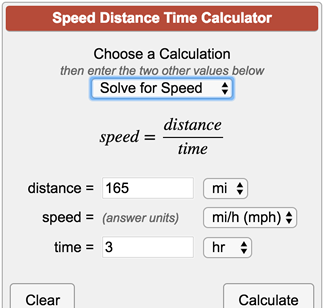
For the amateur here. This is a calculator that can solve for distance, or speed, or time. You supply two of the three variables.


Route 501, one-way, is 24.8km

The Fast Track Comparison given for Toronto and Munich is 10.7km/ph - Toronto, and 19.8km/ph Munich.

If you plug those in, you get a travel time for the 501, one-way of:

Existing: 2 hrs 19m

Munich Speed: 1hr 15

At a 40% improvement you would have an operating speed of 14.98km/ph

That would produce a 1-way trip time of 1hr 39m

****

The current service summaries are a problem in this calculation, on this route, for the simple reason of the diversions ongoing.

That said, its worth comparing what the TTC says, to the math above:

1774382891184.png

The above is the January Service Summary for the 501.

Column explanation:

From left, number of streetcars scheduled, frequency/headway, RTT (Return Trip Time, so both ways, in minutes), then average speed.

So quite handy there, we have the impact of getting to 14km/ph just by looking at the weekend schedules.

These times obviously differ slightly from the math I gave.

Let me translate them though. 198m round trip is 3hr 18m, which is 99m or 1hr 39m one-way.

Using the Saturday numbers, 154m round trip is 2hr 34m, which is 77m or 1hr 17m one-way.

Ok..... fun facts over..... LOL
 
Last edited:
For the amateur here. This is a calculator that can solve for distance, or speed, or time. You supply two of the three variables.


Route 501, one-way, is 24.8km

The Fast Track Comparison given for Toronto and Munich is 10.7km/ph - Toronto, and 19.8km/ph Munich.

If you plug those in, you get a travel time for the 501, one-way of:

Existing: 2 hrs 19m

Munich Speed: 1hr 15

At a 40% improvement you would have an operating speed of 14.98km/ph

That would produce a 1-way trip time of 1hr 39m

****

The current service summaries are a problem in this calculation, on this route, for the simple reason of the diversions ongoing.

That said, its worth comparing what the TTC says, to the math above:

View attachment 724228
The above is the January Service Summary for the 501.

Column explanation:

From left, number of streetcars scheduled, frequency/headway, RTT (Return Trip Time, so both ways, in minutes), then average speed.

So quite handy there, we have the impact of getting to 14km/ph just be looking at the weekend schedules.

These times obviously differ slightly from the math I gave.

Let me translate them though. 198m round trip is 3hr 18m, which is 99m or 1hr 39m one-way.

Using the Saturday numbers, 154m round trip is 1hr 54m, which is 77m or 1hr 17m one-way.

Ok..... fun facts over..... LOL

Aren't those Munich trams more like Line 6 - but with more grade separation (less crossings)? Yeah, if that's what we had, it would be faster. But I didn't see that as one of the changes.

2. Nobody claimed that the Queen Streetcar will be twice as fast, it was simply an illustration of how fast a good tram can be. The actual long-term estimates in the Toronto context are only a fraction of that and even with a 40% increase in average speed, Toronto would still have among the slowest trams in the world. We're currently averaging about 10 km/h - a 40% increase is still only 14.
Also nobody claimed that anyone claimed that the streetcar would be twice as fast. What was claimed was that 501 would be an hour faster.

Jonathan English is not new to the transit advocacy scene in Toronto, and I think that he and Reece Martin are competent enough to know that a right of way would be necessary to run streetcars as fast as Munich, especially during rush hour.
I don't see a need to denigrate English THAT much.

You might not be aware, but Reese is the guy who has been making hysterical posts for a long time on how Eglinton is not going to have enough capacity on day one. But now, when it's not even fully open, and there's no reports of it being overcapacity - unless there's a service issue. He was told time and time again just how far up in the clouds he was on this; but he persisted. His involvement gives me less confidence, not more.

They listed recommendation to cut an hour off the 501 travel time. Are you suggesting they were being deliberately misleading
 
Last edited:
  • Like
Reactions: T3G
You might not be aware, but Reese is the guy who has been making hysterical posts for a long time on how Eglinton is not going to have enough capacity on day one. But now, when it's not even fully open, and there's no reports of it being overcapacity - unless there's a service issue. He was told time and time again just how far up in the clouds he was on this; but he persisted. His involvement gives me less confidence, not more.
I am aware who Reece is, and I don't really see how this matters, unless the argument is, well he thought Eglinton was going to be overcapacity so his opinion is actually less than meaningless.
They listed recommendation to cut an hour off the 501 travel time. Are you suggesting they were being deliberately misleading
Please refer to my previous post. I am not rewriting that

Aren't those Munich trams more like Line 6 - but with more grade separation (less crossings)? Yeah, if that's what we had, it would be faster. But I didn't see that as one of the changes.
I am unsure where you got this assumption from. I checked using Overpass and basically find that with exception to rivers (i would hope so!) and basically-freeways, Munich's trams are all at-grade.

I am also unsure what you mean by "More like Line 6".
 

Back
Top