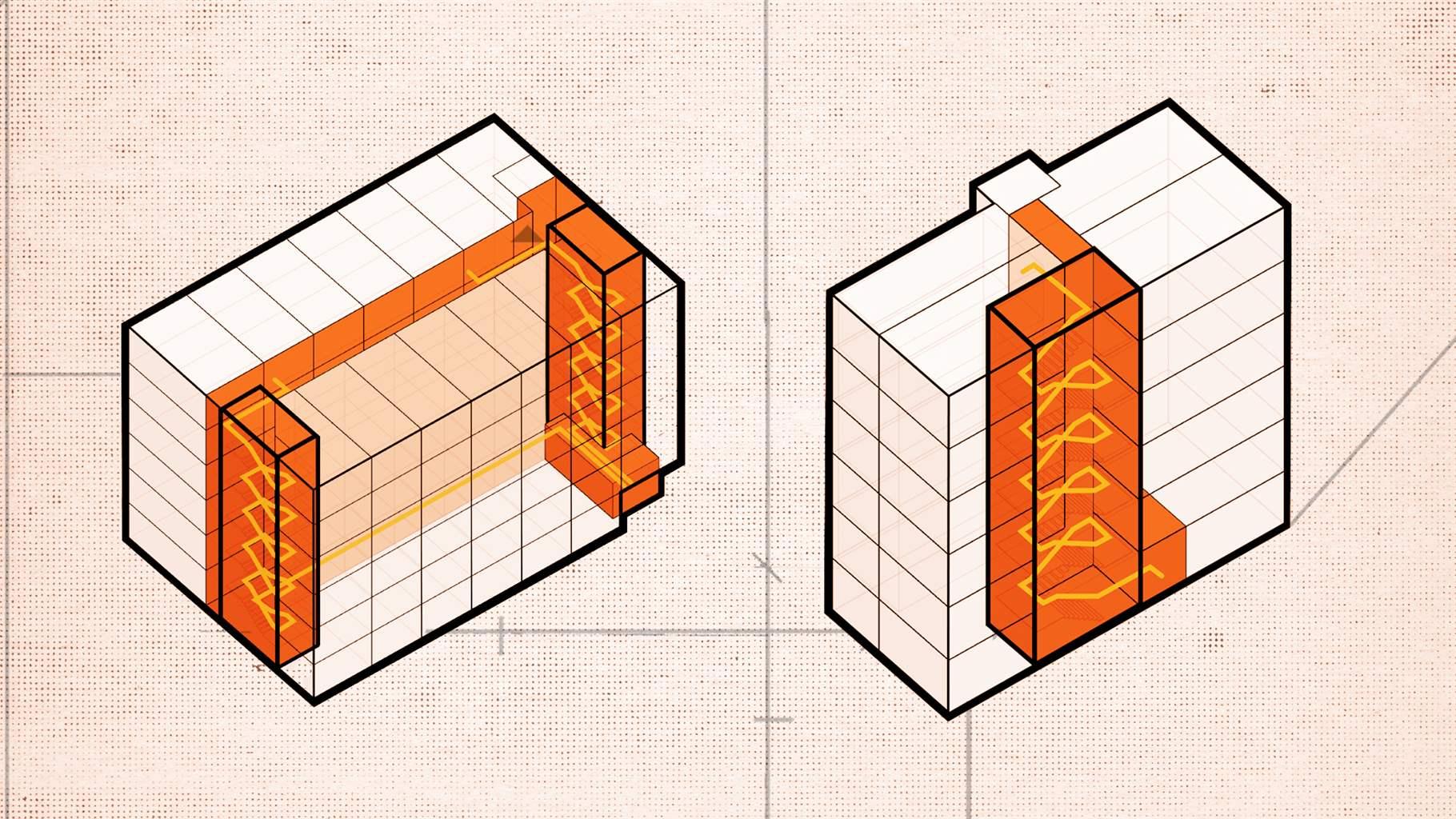
Single stair plans would make apartment buildings financially viable, and spatially possible with much nicer apartments, on many small sites.
This certainly may be true; though compiling precise statistics on how many such buildings have actually been built, in cities now permitting it is no easy task.
Regardless, there certainly in no evidence they have resulted in sufficient numbers of units, or lower cost units as to have improved affordability, based on the Seattle example.
NYC is too recent to evaluate, and I didn't attempt Honolulu.
I'm certainly open to evidence on this point, and I don't outright oppose single egress stairs. My concerns lie with exactly what additional measures are put in place when they are permitted; and then, in turn, what impact
if any, there is on affordability, simply so that we provide an accurate picture.
If it turns out we permit single-egress, with appropriate measures, and for argument's sake it adds 1,000 units of supply over a 10 year period, and that that does not show an affect on affordability, providing there is no negative impact on safety, that's fine.
But it will also turn out to be a non-solution to the housing crisis writ large and not one on which the most energy or ink should be spent or spilled.
I simply think the benefits are over sold.
In Ontario sprinklers are required in all new apartments over three storeys anyway. (This is also true in the US and the Pew study specifically notes this.)
Right, but when dig in, those other measures, such as more retardant materials, and negative air pressure stairs also add costs back. If we adopted a complete ban on combustible materials (wood) as many European and Asian jurisdictions have, that would be significant in terms of added costs, large windows that you can do a rescue through w/o breaking them, are expressly prohibited here to prevent people, particularly kids from falling from windows and so on and so on.
I have yet to see a clear, all-in cost comparison with full set of likely trade-offs costed. Also noted was the many places that allow single egress require wider stairs, sufficient to allow firefighters to enter and 'attack' a fire while residents are simultaneously exiting, not clear, to me, is exactly how much wider than it is than normal, and how much space that consumes.
A design prototype with floor plans:
https://impossibletoronto.ca/design
Nice renders;
I don't see any costing though.
I also think there is fairly close to a zero chance of an outdoor, steep, spiral staircase passing muster as the only means of egress in a winter climate. This design also counts on a single elevator, making every unit above-grade inaccessible, since when the elevator fails or is down for maintenance every person using a mobility aid would be trapped inside or outside their unit.
***
Ah..... if you click though to the book you get the detail......this on jumps out:
Say what?
So, single egress, steep, outdoors in a winter climate, no sprinklers, 1 elevator (small), and combustible cladding? Not clear what fire rating they are adopting, they seem to like the Swiss model, but this often requires a 3-hour rating, which is significantly higher than anything we require here.
This render is great, LOL
Don't get me wrong, I love the idea of herringbone brick floors, sounds great.............not cheap though.
***
Conceptual layout of site, this is the S/W corner of Bathurst and Harbord:
No street trees on Bathurst, that's an immediate no.
Interior layouts: Exterior circular stair on left, interior stair on right:
Statistical assumptions:
Proposed unit sizes are unreasonable small and unlivable, and completely defeat the point of the arguments for the choice made.
All that effort to achieve 472ft2 1 bdrms and and 904ft2 3 bdrms, all with virtually no storage.
Caveats:
Here, we get into the probable issue with the need for wider stairs:
***
The assumptions on how waste would be handled are a complete fiction. Don't get me wrong, the underlying ideas, borrowed from Basel work well there, but they aren't in place here, and I don't foresee that changing.
It would be a complete overhaul of everything:
Their costing assumptions:
So as proposed here, still profoundly unaffordable.
Which they acknowledge below.........and they would like to abolish all LTTs and all DCs and eliminate SPAs entirely..... ha ha, this is complete fantasy.
And how do they propose the City and province replace the lost revenue? They don't, its magic!
If the City replaced the LTT with Property tax, under current assumptions, you're looking at an 19% property tax hike to replace that revenue.
Ditch DCs and that number gets much higher again.
Property tax is a cost factor in rent...........oops.
They also envision developers accepting significantly lower rates of return.
The underlying docs for this work of fiction can be found here:




 www.theglobeandmail.com

 www.office-ou.com