


W
wyliepoon
Guest
During the winter, and especially after a snowstorm like last Thursday's big one, I think about the things around Toronto that do poorly in winter, for example...
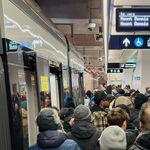
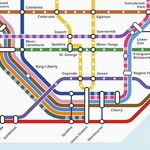
1. The rapid transit system. The TTC has often taken advantage of places like parks, railway ROWs, highway medians, etc. to build subway lines (and the entire Scarborough RT) out in the open, saving money to excavate tunnels for the lines. Problem is that these sections often get shut down during massive snowstorms, forcing hundreds of commuters to pile onto shuttle buses.
Perhaps it's time to take a page from Montreal's all-enclosed metro system? Or maybe we just need to put a roof over all our exposed sections of rapid transit.
2. Steep, slippery slopes. Some of my co-workers reported a bad stretch of Bathurst at Davenport or Dupont where the street negotiates an ancient lake shoreline, where during times of freezing rain and ice many cars were unable to go up the slope.
3. Meltwater on the street. When the weather gets warm after a big snowstorm, a lot of the meltwater in urban areas flows into the streets. The storm drains take a very long time to take in all the water, and so much of the water forms large pools at major intersections, right in the path of pedestrians. They also collect on the curb, and when a car goes over those pools of water at high speed, pedestrians walking on the sidewalk would get soaked.
4. Falling snow and ice from buildings. Very common and very dangerous... especially when they're falling off of skyscrapers and the CN Tower.
5. Unusable public squares in winter. I think of snow-covered Dundas Square during the winter when no events are being held. The square is covered in white except for some tracks in the snow of people who have cut across the square. A square that does so well in the summer is virtually useless in the winter.
Those are just five point that I could think of where Toronto could potentially do better in designing for winter. We could say that global warming will rid these problems for us sometime in the future, but we could also find solutions through design to address these problems.
Comments? Thoughts?
1. The rapid transit system. The TTC has often taken advantage of places like parks, railway ROWs, highway medians, etc. to build subway lines (and the entire Scarborough RT) out in the open, saving money to excavate tunnels for the lines. Problem is that these sections often get shut down during massive snowstorms, forcing hundreds of commuters to pile onto shuttle buses.
Perhaps it's time to take a page from Montreal's all-enclosed metro system? Or maybe we just need to put a roof over all our exposed sections of rapid transit.
2. Steep, slippery slopes. Some of my co-workers reported a bad stretch of Bathurst at Davenport or Dupont where the street negotiates an ancient lake shoreline, where during times of freezing rain and ice many cars were unable to go up the slope.
3. Meltwater on the street. When the weather gets warm after a big snowstorm, a lot of the meltwater in urban areas flows into the streets. The storm drains take a very long time to take in all the water, and so much of the water forms large pools at major intersections, right in the path of pedestrians. They also collect on the curb, and when a car goes over those pools of water at high speed, pedestrians walking on the sidewalk would get soaked.
4. Falling snow and ice from buildings. Very common and very dangerous... especially when they're falling off of skyscrapers and the CN Tower.
5. Unusable public squares in winter. I think of snow-covered Dundas Square during the winter when no events are being held. The square is covered in white except for some tracks in the snow of people who have cut across the square. A square that does so well in the summer is virtually useless in the winter.
Those are just five point that I could think of where Toronto could potentially do better in designing for winter. We could say that global warming will rid these problems for us sometime in the future, but we could also find solutions through design to address these problems.
Comments? Thoughts?