On the other hand, the Russian air force is coming out of the Ukraine war with a larger, more modern fleet and much more experienced pilots, which is a substantial threat to the rest of us:
...
This should give you a clue why the RCAF is so insistent on the F-35.
Great analysis from RUSI, as usual. My take on it, as a report from a Western military think tank made for consumption by Western militaries, it has a clear message in mind:
don't fall into the trap of underestimating your enemy.
And while I agree with the importance of that sort of messaging, I would still argue that Russian Aerospace Force (VKS) is still not a significant threat to NATO. In other words, I agree that VKS is no longer the paper tiger it was back in 2022, but it is still not a real tiger either. As of 2026, it is a cardboard tiger.
Without actually disagreeing with anything in RUSI report, here are some of my thoughts in addition.
1. VKS is incapable of penetration operations into contested airspace.
- The last penetration operation Russia has conducted into the Ukrainian territory was 2 weeks into the war. They were losing multiple aircraft daily to Soviet-era mid- and long-range air defense systems. They would then send a helicopter to rescue every single pilot ejected behind enemy lines. They were losing plenty of helicopters that way to Cold War era MANPADS (US-supplied Stingers and Soviet stockpiles of Strela and Igla missiles).
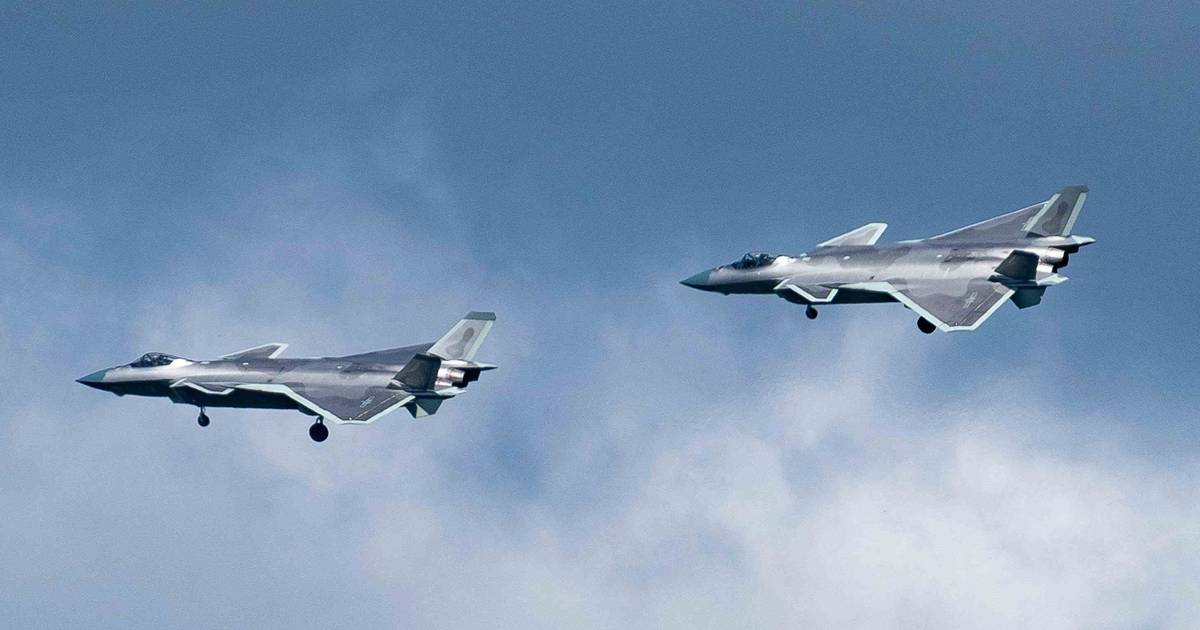
- Su-57 was supposed to be the enabler for the VKS to conduct penetration missions. It is the only manned Russian aircraft that is supposed to have low radar visibility. However, there have always been rumors that it is not actually stealth. As in, while it has lower radar cross-section than a regular aircraft, it is still not enough to functionally evade radar and missile lock-on at any meaningfully reduced ranges. The fact that VKS has 20 of these so called "stealth" aircraft but is yet to even try to use them in combat says all you need to know. If they were capable stealth aircraft, they would be flying penetrating missions, going after and systematically degrading Ukrainian air defenses, establishing local air superiority zones to allow 4th gen aircraft to come in. The fact that they're not doing any of that is a clear sign that Su-57 is not a 5th gen aircraft Putin's PR team claims it to be. It's a pretender.
- To add insult to injury on the Su-57 front, what RUSI report conveniently omits is the fact that all 20 Su-57 were delivered to the VKS prior to 2025. There have been exactly zero Su-57 deliveries for a year now.
2. Russian glide bomb threat is real, but it can be countered.
- Russian unpowered glide bombs of meaningful sizes have the range of 70 km from the point of release. They are currently experimenting with propulsion-assisted glide bombs to extend their range to 100-120 km, but that experiment is far from being widely adopted.
- PATRIOT PAC-2 has an estimated range of 100-160 km. Forward deployment of Patriots should achieve enough of a standoff range to negate the threat of the Russian glide bombs.
- In fact, Ukraine has already successfully demonstrated this in 2023 when they received their first Patriots. They seem to have dedicated a single Patriot battery for forward deployment in the summer of 2023. They were setting up ambushes in various spots along the frontline, shooting down Su-34s on glide bomb missions over occupied territories. They even shot down 4 aircraft in one volley over the Russian Bryansk region. Unfortunately, their opsec was not the best, so after a few months Russia tracked them down and destroyed them with an Iskander missile strike. And because Ukraine needs Patriots to defend their cities and military airfields, they have not used the tactic since.
3. NATO forces have the capability to establish air supremacy (in time).
- VKS was incapable or breaking trough the antiquated soviet air defenses Ukraine had in 2022. They are going to be completely incapable of breaking through NATO's modern integrated air defenses.
- NATO has assets to slowly degrade Russian air defenses. F-22s, F-35s, and B2s can fly penetration missions and over time destroy enough aircraft and air defenses so that 4th gen aircraft can come in.
So yes, if Canada wants to participate in the penetration missions against Russia, that's when F-35s will come in handy for RAF. And when we will need to have a standoff capability in the arctic against China, F-35s will be a must. F-35s will be absolutely useless against any possible conflict with the US (them being able to flip a software kill-switch on any F-35 at any time they'd like). So while I do like the idea of having some F-35s in RAF, I also wouldn't mind having some Grippens too (or any other advanced 4th gen multi-role aircraft).