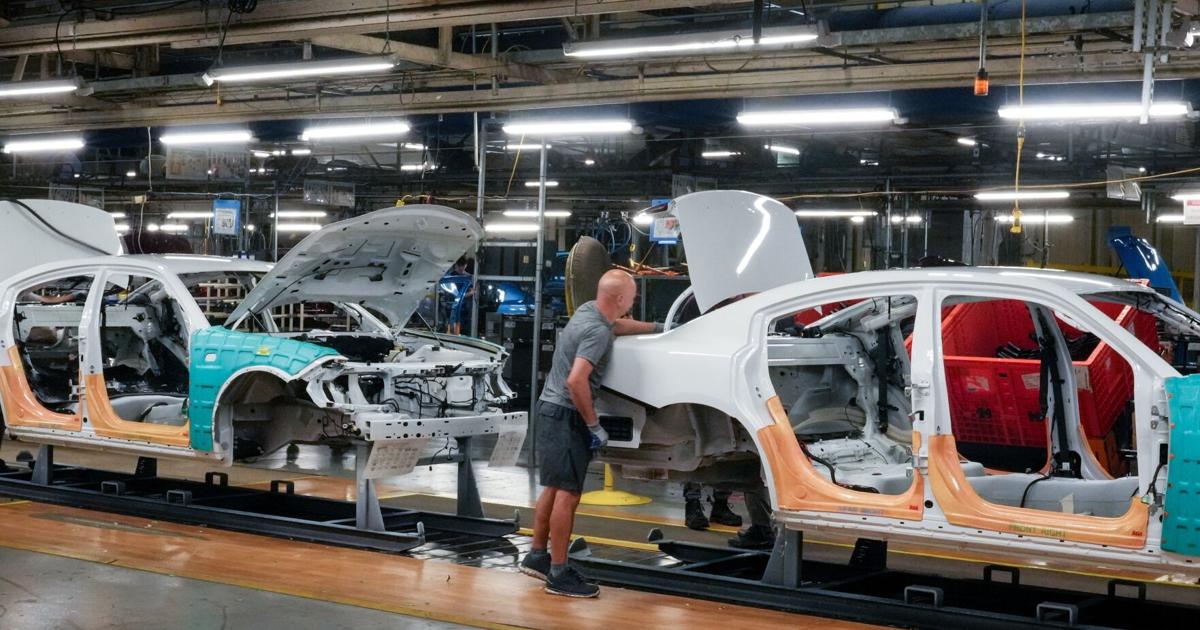
Oakville Ford Stamping Facility | 22.24m | 1s | Ford | Gala & Associates

2. This isn't a "build it and they will come thing with transit." You can't tow your jetski, RV, snowmobiles or boats with public transit.

Sure, agreed, but even the majority of Americans own none of the above.

There are also some real public safety concerns in North America but particularly in the US on transit systems.

Very exaggerated in Canada, I own a car, but I'm on the system 3x per week, I rarely witness anything even remotely threatening. (knock wood).

The U.S. is a different issue w/greater crime safety issues in every facet of life; but also a transit system culture that outside of NYC mostly captures captive riders.

As I outline above, whose relying on a 'subway that is 15M at rush hour and 28M in the evening), no one who has a choice is the honest answer.

3. Most of North America is more rural than you think and covering long distances is more difficult, if not impossible by public transit.

Going to disagree here. I think we would agree to a great degree on auto-centric living arrangements, but your use of the word rural I see as problematic vs suburban or ex-urban.

Those forms aren't particularly conducive to transit, though it needs to be said, you could say that for much of Brampton whose transit ridership rivals Dallas (Dallas 46M, Brampton 41M)

4. Public transit can augment personal travel needs but for many it just won't replace it.

Sure.

I used to use the TTC quite a bit but I essentially abandoned it about seven or eight years ago. Too many service failures, too many crazies and day after day a poor trip experience.

I think that's unfortunate, and there is certainly lots of room for the TTC to improve; but in the same time period, and still owning a car, I've gotten more transit use rather than less.

I would suppose a great deal of that may have to deal with location, I'm closer to downtown than you and probably benefit from more frequent surface routes. But, also, I think your tolerance for urban environments seems like it may be a bit less than my own.

Anyone who thinks public transit is somehow going to get rid of personal vehicles needs to give their head a vigorous shake.

Did someone make that case and I missed it?

I've used Bike, car and public transit for my commuting needs over the years and the car won.

I will always tell people, respectfully not to conflate an anecdote with a statistically significant trend. Evidence rules.

......Transit vs car isn't a zero sum game and there is no reason why both can't coexist.

Agreed. I like to go camping at least once a year, but also go out of town to hike from time to time. Trips that are respectively, impossible by transit and very challenging.
 
Last edited:
OK, most people in Ontario could use transit, but the Americans would probably still buy a lot of cars. Far enough. I don't like the notion of our prosperity tied to car use in any jurisdiction, but it's not quite the noose on local transit development that it might appear to be at first glance.

For the record, there's so much more we could do to get people on transit in Ontario if we're serious about it. All-day GO service is needed, with each suburb having rapid transit fanning out of the GO stations. For instance, I should be able to go to Burlington or Oakville station on the Lakeshore West line and then take rapid transit downtown and to the various neighbourhoods of the city (and major destinations like the Ford assembly plant) quickly such that transit becomes practical. Suburban transit shouldn't require spending 3 or 4 times more time getting from point A to point B versus driving. That's a systematic failure of our transportation system that the provincial government needs to address.

If transit was just slightly slower than driving, it would still be more comfortable and practical to have someone else do the driving (and shoulder the true costs of transportation such as vehicle depreciation, insurance, and maintenance) while you work, chat with family, read, watch Netflix, invest, etc. aboard the transit vehicle going from suburb to suburb.

In other countries, even rural areas have viable transit. You get van-sized vehicles that go from town to town and connect with intercity bus and rail stations. We need work more on optimizing transit service in the suburbs and in smaller communities. It's not really that hard. The space is there for transit-only surface rapid transit lanes.
 
Last edited:
Stamping I presume is poking holes through die casts and whatnot...

...so I also presume then this structure will not be housing lines for specific vehicles per se, rather hosting a process that serves all their products?
 
Now that Stellantis has all but declared the Brampton facility closed, is Ford going to do the same with Oakville or do they not have the capacity in the USA assembly plants to move Super Duty production there? How soon before one of these players declare bankruptcy. This can't continue.
 
Now that Stellantis has all but declared the Brampton facility closed, is Ford going to do the same with Oakville or do they not have the capacity in the USA assembly plants to move Super Duty production there? How soon before one of these players declare bankruptcy. This can't continue.
Stellantis is the only one verging on the edge of bankruptcy and it's not because of Tariffs.

GM and Ford will be fine.

Ford's work here continues - given the extensive investment happening here they would have cut it back if they planned to cancel superduty production entirely.

I do suspect they will max out their US production capacity for the US market, but the superduty market is large and the Canadian production site can probably mostly supply the domestic Canadian and Mexican market. Similar to how GM is basically sending all the Silverados coming out of Oshawa to just the domestic market at this point, with US production focusing on the US market. It's more likely we will see more work shifts in the US plants and less shifts in Canada than total production suspension. I also bet that Ford is suspecting any auto tariffs will be dropped in 2028. With production here not starting until later in 2026 here, they are likely planning to just run the plant under capacity for the first two years. I could see Ford retooling a bit to produce F-150s here as well so the plant can really focus on Canadian and Mexican market demand similar to how Oshawa makes both light and heavy duty Silverados.

VW is also continuing in St Thomas as far as we know (that will be a parts supplier creating the batteries, which are more likely to survive tariff-free through Trump's presidency than final auto assembly), and of course Honda and especially Toyota produce almost all of their best-selling product lines in Canada and will struggle to shift that production south of the border before the auto-tariffs likely disappear in 2028.
 
Stellantis is the only one verging on the edge of bankruptcy and it's not because of Tariffs.
Indeed, it’s because their vehicles are overpriced crap.


If it’s not a Ram truck or Jeep, they won’t find one to make in Canada that anyone wants to buy.
 
I only remember one on the east side and it is still there:
It was dropped in 2012 in what was just about the most anti-climatic explosive demolition ever for outside spectators as they couldn't see anything because of the early morning fog.

Someone did take a video of the event from inside the grounds though which was actually somewhat dramatic

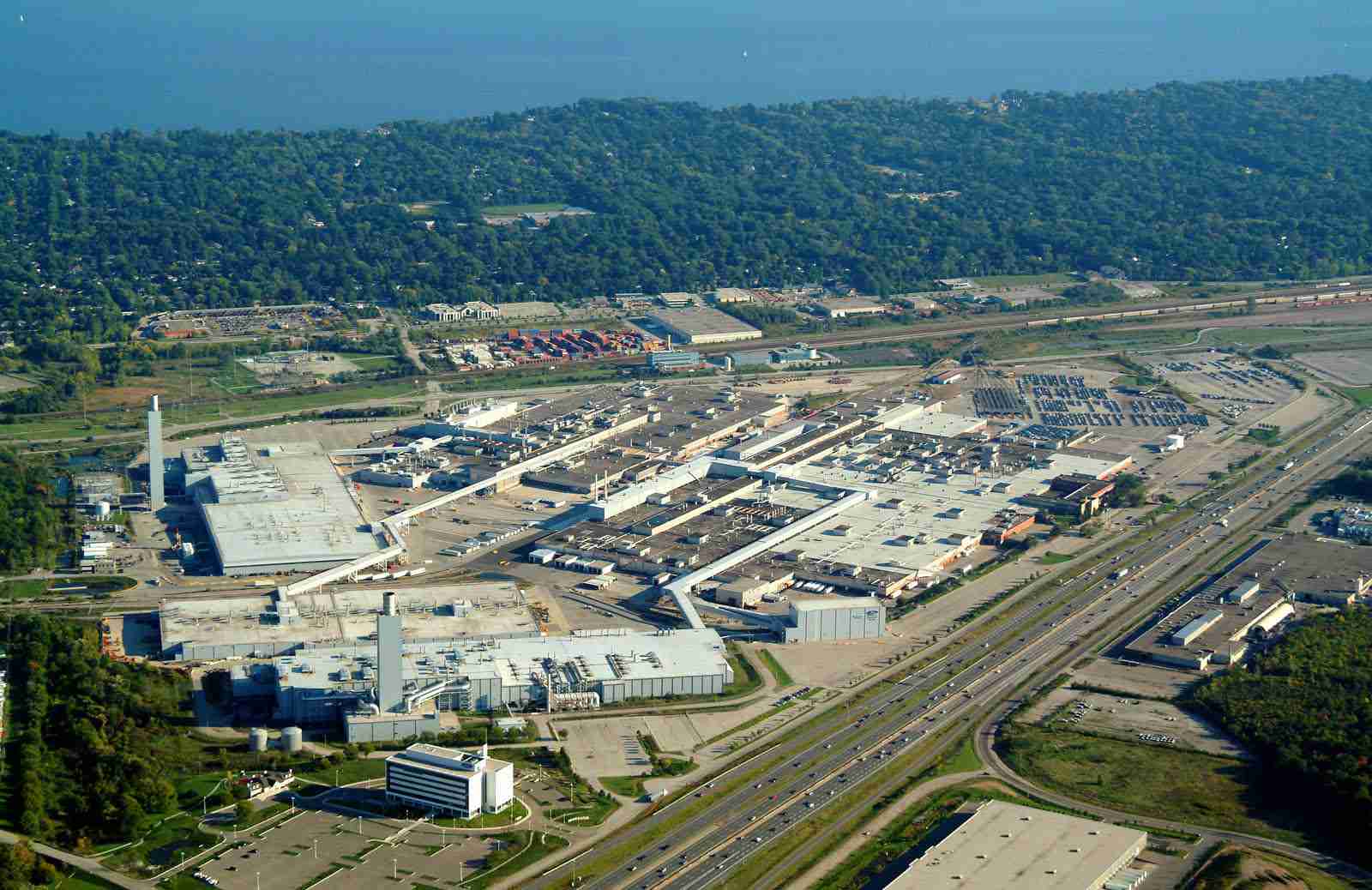
Seems like it would have been quite the show had only blasted during the daytime when fog cover is less likely. In any case here's how the plant looked like before:
Ford Oakville.jpg

 
Great post @SkylineHorizons! Now I remember I that thing. For some reason I don't recall the demolition of that building. That's a fantastic aerial shot. I should try to recreate it on my next outing there.
 
Great post @SkylineHorizons! Now I remember I that thing. For some reason I don't recall the demolition of that building. That's a fantastic aerial shot. I should try to recreate it on my next outing there.
Thanks 👍 I was actually just over there earlier in the year myself-there's not too many complexes of it's size in Ontario anymore, always found such industrial facilities interesting;
Ford0.JPG

The remaining stack is still the tallest structure in Oakville for now, with stamping facility seen right behind it
Ford1.JPG


Ford2.JPG


Ford3.JPG


Ford4.JPG


Ford5.JPG


Ford6.JPG
 

Back
Top