News   Dec 09, 2025
 103     0 
News   Dec 08, 2025
 1K     1 
News   Dec 08, 2025
 2K     4 

Toronto Eglinton Line 5 | ?m | ?s | Metrolinx | Arcadis

Wait, is the west extension a separate line that will be a transfer? Or one day will we have 1 line from renforth to Kennedy?
When the Crosstown West opens the line will run from Renforth to Kennedy, no transfers. Unless the decision is made to have some trains do scheduled short-turn runs.
 
I would accept "The trains were not designed for this, they were designed to be a regular streetcar." as an argument if the cars in question were refurbished PCCs. Either this is misinformation (assume everything on Reddit is garbage unless otherwise indicated), or otherwise it says a lot of very negative things about BBD's signalling division that they couldn't figure out how to enable line of sight operation on a signalling system. But I'm going with the former, Reddit is like Facebook for those who think they are too cool for Facebook.
I think you're pulling too many hairstrings over the "Streetcar vs LRT" nomenclature.

The poster is clearly referring to the difference in running the LRT using ATO vs on street operation, in which case this is a very valid problem. There are very few, if any, instances of ATO being used on LRTs around the world, nevermind LRTs that have to swap from ATO to regular manual operations in between stations like Eglinton needs to do. To say that the tech behind this are complicated is an understatement to say the least. In layman's terms, the Eglinton LRVs need to be able to switch from operating like a metro to operating like a tram, while at speed. It can't be understanded just how complicated that is from a technical standpoint, not to mention that actual operations themselves.

With something like Ottawa, sure that's been a complete mess, but at least in Ottawa it consistently uses ATO throughout the entire length of the line: at no point do operators need to switch signalling systems and start manually operating the train. Its relatively easy to design one or the other, it's not easy to make both.

P.S: I actually want to bring in another system that faced a similar problem recently, that being Crossrail in London. There, they had to come up with a system where trains would transition from being mainline trains operating with standard mainline operations and signalling, to metro like operations and signalling that can handle 90s headways in the tunnels. Decoding the signalling for that delayed the project by 18 months.

We're basically asking Eglinton to do the same thing, except now we're dealing with tram street side operations.

 
Last edited:
I think you're pulling too many hairstrings over the "Streetcar vs LRT" nomenclature.

The poster is clearly referring to the difference in running the LRT using ATO vs on street operation, in which case this is a very valid problem. There are very few, if any, instances of ATO being used on LRTs around the world, nevermind LRTs that have to swap from ATO to regular manual operations in between stations like Eglinton needs to do. To say that the tech behind this are complicated is an understatement to say the least. In layman's terms, the Eglinton LRVs need to be able to switch from operating like a metro to operating like a tram, while at speed. It can't be understanded just how complicated that is from a technical standpoint, not to mention that actual operations themselves.

With something like Ottawa, sure that's been a complete mess, but at least in Ottawa it consistently uses ATO throughout the entire length of the line: at no point do operators need to switch signalling systems and start manually operating the train. Its relatively easy to design one or the other, it's not easy to make both.
But doesn't Line 1's ATO system allow manual operations, too?
 
But doesn't Line 1's ATO system allow manual operations, too?
It allows for it, but only.in emergency situations. Even when we had partial availability of ATC, the transition took place at stations where trains could transition at a standstill.

With Eglinton, not only do we need to transition as a regular part of the lines operations, but the transition needs to happen whilst the train is running at speed between Laird and Sunnybrooke Park.

The following is me spit balling, but a potential fix I imagine could be to resignal the section directly east of laird with manual signalling, and allow drivers to swap signalling systems while Idling at Laird. However I imagine this solution would cause problems to being able to short turn trains there, as it would need to be done manually without ATO assistance. Someone can correct me on this part however.

Edit: in some cases the transition wasn't at stations, and in those cases the train would have to stop mid tunnel to transition systems. This happened at Eglinton where the train had to stop a few train lengths north of the platform to switch to manual operations.
 
Last edited:
I think you're pulling too many hairstrings over the "Streetcar vs LRT" nomenclature.

The poster is clearly referring to the difference in running the LRT using ATO vs on street operation, in which case this is a very valid problem. There are very few, if any, instances of ATO being used on LRTs around the world, nevermind LRTs that have to swap from ATO to regular manual operations in between stations like Eglinton needs to do. To say that the tech behind this are complicated is an understatement to say the least. In layman's terms, the Eglinton LRVs need to be able to switch from operating like a metro to operating like a tram, while at speed. It can't be understanded just how complicated that is from a technical standpoint, not to mention that actual operations themselves.

With something like Ottawa, sure that's been a complete mess, but at least in Ottawa it consistently uses ATO throughout the entire length of the line: at no point do operators need to switch signalling systems and start manually operating the train. Its relatively easy to design one or the other, it's not easy to make both.

P.S: I actually want to bring in another system that faced a similar problem recently, that being Crossrail in London. There, they had to come up with a system where trains would transition from being mainline trains operating with standard mainline operations and signalling, to metro like operations and signalling that can handle 90s headways in the tunnels. Decoding the signalling for that delayed the project by 18 months.

We're basically asking Eglinton to do the same thing, except now we're dealing with tram street side operations.
You're stretching an awful lot here.

ATC/ATO can be installed on virtually any modern steel wheeled transit vehicle, regardless of the form the outside of it takes. In fact, the control equipment is very similar in most.

So yes, if they wanted to, they could install it on the Flexities used on the legacy system. Now, there's no good reason to do so - but the equipment itself is agnostic to the environment it operates in, and is perfectly capable of having it installed.

Dan
 
Wishful thinking there. But I choose to share your optimism, if only for my own sanity.
Oh I don't know - Crosstown West seems to be moving on surprisingly quickly. I doubt it will be a half-decade (or more) behind schedule like the original Crosstown. I wouldn't be surprised if (optimistically) Crosstown opens in 2025 or 2026, while Crosstown West opens in 2031.

The biggest question I think is when the third phase (Renforth to Pearson) will open. They seem to be dogging the current tranche of projects (the Line 4 and 5 extensions).
 
You're stretching an awful lot here.

ATC/ATO can be installed on virtually any modern steel wheeled transit vehicle, regardless of the form the outside of it takes. In fact, the control equipment is very similar in most.

So yes, if they wanted to, they could install it on the Flexities used on the legacy system. Now, there's no good reason to do so - but the equipment itself is agnostic to the environment it operates in, and is perfectly capable of having it installed.

Dan
This. Plus if Waterloo's vehicles are able to do the transition from ATP to LOS while moving the point being made by the redditor is moot.
 
You're stretching an awful lot here.

ATC/ATO can be installed on virtually any modern steel wheeled transit vehicle, regardless of the form the outside of it takes. In fact, the control equipment is very similar in most.

So yes, if they wanted to, they could install it on the Flexities used on the legacy system. Now, there's no good reason to do so - but the equipment itself is agnostic to the environment it operates in, and is perfectly capable of having it installed.

Dan
I don't think it's about whether or not it can be installed (although I think there is value in the idea that the flexities weren't designed with them in mind), but rather the complexities of transitioning to/from ATO whilst the vehicle is in motion, travelling through Brentcliffe Portal.

Making an ATO system isn't difficult, making a hybrid system is.
 
I've noticed a large number of testing vehicles on the east end of the line running gaps of roughly 5 minutes, more or less. I haven't seen this many vehicles on the line. Pretty exciting!
Thought I'd just point this out. In the very bottom video, at 1:18, the trains are quite bunched up...
 
Not much new, just a recap of the June 27 Mx Board meeting. At least it's finally made it into mainstream media:

Report sheds light on beleaguered Eglinton Crosstown LRT’s progress​

 
And in other Eglinton Crosstown news...

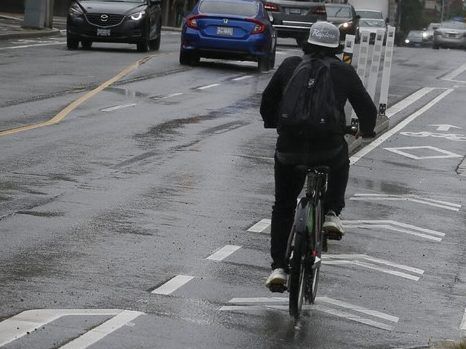
Eglinton to be ripped up for bike lanes after LRT construction​

My suggestion to the TTC: just cancel the 34 Eglinton parallel bus service. Avenue to Yonge is already gridlocked in rush hour with this one lane per direction design. They are just extending this all the way to Keele so nothing moves.
 

Back
Top